

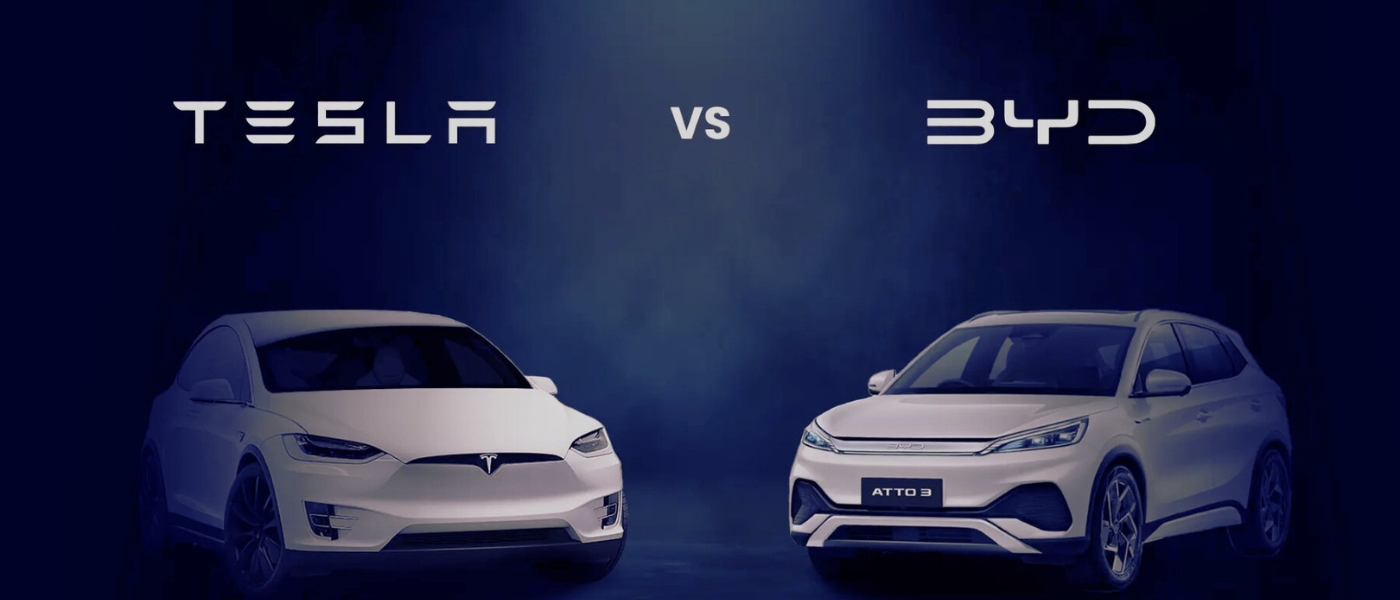
Why is BYD winning the EV war against Tesla?
The global electric vehicle (EV) revolution, once defined by Tesla’s pioneering spirit and Silicon Valley flair, is now being quietly but powerfully redefined by an unexpected challenger from China: BYD. Once dismissed as a low-cost alternative, BYD has emerged as the world’s top EV manufacturer — not through flash or fanfare, but through industrial precision, aggressive scale, and a masterful grasp of global markets. In a matter of years, it has flipped the narrative, outpacing Tesla in unit sales and reshaping the balance of power in one of the 21st century’s most strategic industries.
This is not merely a race between two carmakers. It is a proxy battle for technological supremacy, industrial resilience, and geopolitical influence. While Tesla remains a symbol of innovation in the West, BYD is rapidly becoming the standard-bearer of the East — armed with vertical integration, cost leadership, and China’s strategic industrial support. The question today is no longer whether BYD can catch up to Tesla, but whether Tesla can keep up with BYD.
The shift in global EV leadership
In recent years, the global electric vehicle (EV) landscape has undergone a tectonic shift. Once considered the undisputed leader in EV innovation, Tesla now finds itself challenged — and in many markets, outpaced — by Chinese automaker BYD. The headlines that once hailed Tesla’s dominance are now tempered by a more complex narrative: the rise of a competitor that blends vertical integration, government backing, and scale like never before.
The turning point in this leadership transition wasn’t a singular event but a series of market responses and structural advantages that BYD leveraged. Unlike Tesla, which pioneered the EV category with revolutionary technology, BYD built its strategy on industrial precision, affordability, and pragmatic expansion. It now sells more EVs than Tesla globally and continues to gain ground month after month, particularly in Asia, Europe, and Latin America.
Tesla’s early lead gave it an image of futuristic disruption. But BYD’s grounded approach — rooted in China’s strong industrial policy and demand stimulation mechanisms — has created a formidable business model. It doesn’t just make cars; it owns the battery supply chain, chips, and even semiconductors. Tesla, meanwhile, is increasingly exposed to market saturation and reliance on a narrower product line.
The shift is more than market share. It symbolizes a broader trend: the transfer of industrial supremacy from Silicon Valley to China’s innovation hubs. While Tesla still leads in the U.S., BYD is winning the war everywhere else.
Vertical integration: BYD’s masterstroke
One of the most overlooked but most significant aspects of BYD’s success lies in its vertical integration. While many automakers — including Tesla — rely on a web of suppliers, BYD manufactures its own batteries, chips, powertrains, and semiconductors. This internal capacity enables them to control costs, avoid shortages, and maintain pricing power even in turbulent times.
The advantage of making your own components became strikingly clear during the global chip shortage and battery price spikes. Where others struggled, BYD thrived. Their control over lithium iron phosphate (LFP) batteries — cheaper and more stable than traditional lithium-ion batteries — gives them a crucial edge in affordability without sacrificing too much performance.
Tesla has recognized this and is moving toward in-house battery manufacturing (notably with its 4680 cells), but it still depends on Panasonic, CATL, and LG. In contrast, BYD’s ability to innovate and scale battery tech internally is a major reason for its rapid deployment of new models and consistent profit margins.
Beyond cost control, vertical integration gives BYD speed. It can iterate, test, and release new vehicle versions faster than its rivals — a significant competitive advantage in fast-changing global EV markets.
Product strategy: affordability meets scale
Tesla’s product lineup, while iconic, caters primarily to the premium segment. Its vehicles are aspirational, sleek, and high-margin. BYD, on the other hand, has deliberately pursued a broader market — from budget-friendly city cars like the Dolphin and Seagull to luxury offerings like the Han and Tang models.
This multi-tiered strategy allows BYD to dominate both volume and revenue. In 2024, it sold more units than Tesla globally — and not just because of Chinese buyers. BYD’s expansion into Southeast Asia, the Middle East, and Europe has been fueled by its affordable EVs that undercut Tesla’s prices by 20–40%.
BYD’s scalability is unmatched. Its manufacturing facilities in China, Thailand, Hungary, and Brazil are designed to produce millions of units a year. Tesla, while expanding its Gigafactories, still has production bottlenecks and faces higher costs per unit.
This affordability-at-scale model is not about cheap products; it’s about making electric mobility accessible. It’s a decisive factor in winning emerging markets — and eventually, dominating the middle-class EV sector worldwide.
Geopolitical winds at BYD’s back
China’s industrial policy is not neutral. It has explicitly prioritized EVs as a pillar of its national strategy. This alignment between government support and BYD’s ambitions has created a turbocharged path to growth. Subsidies, land grants, low-cost financing, and export assistance have given BYD an operating environment that Tesla cannot replicate in the U.S. or Europe.
Tesla, once China’s favorite foreign automaker, is now viewed with increasing scrutiny. Rising geopolitical tensions and trade restrictions are pushing Tesla to diversify production — a costly and time-consuming effort. BYD, meanwhile, is reaping the benefits of Belt and Road trade corridors and Chinese export financing arms.
The U.S. and EU have begun implementing tariffs and regulatory barriers against Chinese EVs, but the sheer scale of BYD’s progress makes reversing the trend difficult. Governments can slow it down, but the market is already shifting. In many developing economies, Chinese EVs (mostly BYD) are already outselling Western brands due to their affordability and availability.
In a world fractured by politics and energy transitions, BYD’s deep ties with China’s state machinery are a double-edged sword — but so far, the edge has cut in its favor.
Brand evolution- from copycat to contender
Ten years ago, BYD was dismissed by critics as a low-cost copycat. Today, it’s a global tech brand. That transformation hasn’t happened by accident. BYD has invested massively in R&D, design, and branding. Collaborations with global designers, safety certifications in Europe, and premium-level models have repositioned the company from “cheap Chinese carmaker” to “smart mobility innovator.”
In contrast, Tesla has struggled with brand fatigue and declining novelty. Elon Musk’s polarizing public image, especially on social platforms, has begun to alienate certain segments of Tesla’s audience. Moreover, Tesla’s product design has remained relatively unchanged over the last five years, while BYD launches refreshed models nearly every year.
BYD has also been savvy in localizing its brand strategy. In Brazil, it’s seen as a green tech solution. In Thailand, as an affordable luxury. In Europe, as an EV disruptor. This level of cultural agility is key to long-term brand building.
Reputation is a long game. While Tesla remains aspirational in some markets, BYD is steadily becoming desirable — and in the end, desire drives demand.
Supply chain resilience in a fragmented world
BYD’s dominance is inseparable from its mastery of the supply chain. While global trade disruptions — from semiconductor shortages to shipping delays — paralyzed the auto industry post-COVID, BYD kept rolling. Its in-house battery plants, domestic sourcing of rare earths, and proximity to upstream suppliers reduced its vulnerability.
Tesla, though innovative, remains exposed to long-distance supply networks. Battery raw materials from Australia, components from Asia, and manufacturing facilities in Germany and Texas create geopolitical and logistical complexity. Any weak link creates risk.
BYD benefits from China’s tightly integrated industrial zones, state-managed logistics, and coordinated infrastructure. This gives it not just speed, but insulation — a key advantage in an era of “friendshoring” and protectionist trade.
Global production today isn’t just about capability — it’s about control. BYD controls what it needs, while Tesla negotiates with what it can’t fully own.
Design and innovation pace
Tesla set the bar with minimalist, futuristic design and world-class performance. But innovation has slowed. Most Tesla models on the road today look much like those released 5–7 years ago. BYD, in contrast, operates on a shorter innovation cycle, introducing new model lines and tech updates annually.
BYD’s design leap, aided by European talents like Wolfgang Egger, has won awards and attention. Their interiors are now more luxurious, their infotainment systems faster, and their exteriors increasingly aggressive and aerodynamic.
Tesla’s software remains its strongest point, but BYD is catching up fast with DiLink — its connected OS ecosystem — and competitive autonomy features. In a world where customer experience and feature freshness matter, BYD’s responsiveness is a strategic asset.
Innovation is not just about firsts. It’s about consistency — and BYD is proving itself to be more consistent.
Tesla’s market saturation risk
Tesla has already conquered much of its core market. In the U.S., its EV market share is beginning to decline under competition from Ford, Hyundai, and Rivian. In China, it faces intense price wars. In Europe, production costs and policy barriers eat into margins.
The premium EV segment Tesla dominates is not growing as fast as the mid-range or entry-level categories — precisely where BYD is strongest. And unlike Tesla, BYD doesn’t rely on a single figurehead or product category. Its diversified portfolio allows it to move flexibly where demand grows.
Tesla also faces internal headwinds — layoffs, delivery misses, and falling customer satisfaction in some regions. While it’s still profitable and admired, its growth story is plateauing.
A saturated market leaves little room to maneuver. BYD, still scaling up, has more room to run — and that may be its greatest advantage.
Penetrating emerging markets with precision
From Brazil to Indonesia, BYD is not just selling cars — it’s building ecosystems. Local assembly plants, battery partnerships, and government contracts are enabling the brand to become embedded in emerging economies’ energy transitions.
Tesla’s entry strategy in such markets is minimal, if not nonexistent. The company focuses heavily on mature markets with higher margins. BYD takes the opposite approach: go wide, sell more, and scale fast. It doesn’t need high margins on every unit — it needs strategic presence.
Moreover, BYD’s understanding of local regulatory frameworks and consumer behavior is deep. Its vehicles are adapted to climate, road conditions, and infrastructure realities in these regions. It builds for the world, not just the wealthy.
As EV demand explodes outside Europe and North America, BYD is already present — not just as a seller, but as a builder.
The road ahead: A Chinese century of electric mobility?
The EV war is not over. Tesla still commands brand equity, cash reserves, and technical brilliance. But the momentum is shifting. BYD, with its combination of speed, scale, and strategy, is no longer just a competitor — it is the new standard.
The real question is no longer whether BYD can beat Tesla. It’s how Tesla will respond to a new global EV order shaped in Shenzhen, not Silicon Valley. Will it double down on premium, refocus on affordability, or reinvent itself again?
Meanwhile, BYD is not just building cars — it’s building influence. As it becomes the template for other Chinese automakers, it is shaping the future of mobility in a multipolar world.
The EV revolution was sparked in California. But it may well be won in China.



 revolution, once defined by Tesla’s pioneering spirit and Silicon Valley flair, is now being quietly but powerfully redefined by an unexpected challenger from China: BYD. Once dismissed as a low-cost alternative, BYD has emerged as the world’s top EV manufacturer — not through flash or ...)
