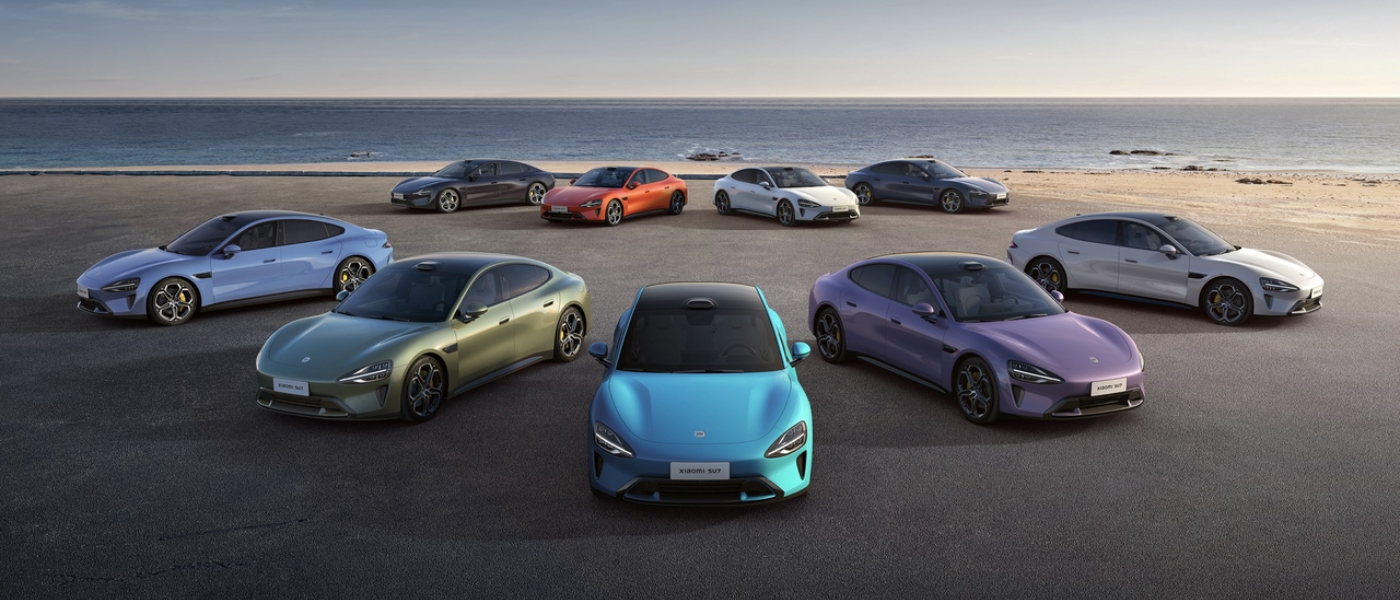
Xiaomi SU7: The electric game-changer
The global electric vehicle (EV) market is evolving at a breathtaking pace, with established automakers racing to retain dominance while new players disrupt the landscape. Among the latest challengers is Xiaomi, a company globally recognized for its smartphones and smart devices. With the launch of the Xiaomi SU7, the tech giant signals its ambition to extend its ecosystem into the automotive industry. This move is not simply a diversification strategy but a bold statement: Xiaomi intends to become a serious contender in the race toward sustainable mobility.
A bold step into the EV arena
The introduction of the Xiaomi SU7 has generated significant interest because it marks a rare fusion of consumer electronics expertise with automotive engineering. Unlike traditional car manufacturers, Xiaomi brings decades of experience in software integration, user interface design, and ecosystem building. These elements translate into a car that is not only a machine of transport but also a smart mobility hub. In this sense, the SU7 positions itself as more than a vehicle—it represents Xiaomi’s vision of the “connected car of the future.”
What makes the SU7 particularly disruptive is its potential to democratize electric mobility. Historically, EV innovation has been associated with premium brands such as Tesla, leaving affordability as a lingering challenge. By leveraging its cost-efficient production models, Xiaomi aims to deliver advanced EV technology at a price point accessible to a broader audience. This democratization could make the SU7 the genuine “electric game-changer” of the decade.
Design meets innovation
Xiaomi has built its reputation on sleek, user-friendly product design, and the SU7 carries this DNA into the EV industry. The exterior styling reflects both aerodynamic efficiency and futuristic appeal, offering a design that blends elegance with functionality. Every curve and line of the SU7 is optimized to minimize drag, a critical factor in EV performance and range. Unlike many electric sedans that sacrifice personality for efficiency, the SU7 achieves a balance that will appeal to consumers seeking both aesthetics and performance.
Inside the cabin, the SU7 transforms into a technology-rich environment that feels instantly familiar to Xiaomi’s loyal customers. A large central display, intuitive touch controls, and seamless smartphone integration create an environment where drivers and passengers feel connected. By translating its expertise in consumer electronics into the cockpit, Xiaomi ensures that the SU7 stands apart in terms of usability and user experience.
This attention to design also reflects a broader strategic aim: building brand continuity. Just as Xiaomi smartphones create a recognizable design language, the SU7 embodies Xiaomi’s ecosystem approach. This consistency not only strengthens consumer loyalty but also positions the car as an extension of the digital lifestyle, seamlessly blending mobility with everyday connectivity.
Performance and engineering excellence
Beyond aesthetics, the Xiaomi SU7 impresses with performance metrics that challenge industry leaders. Equipped with powerful electric motors and advanced battery technology, the vehicle promises acceleration, range, and efficiency that rival established brands. Early reports suggest that Xiaomi has carefully benchmarked the SU7 against Tesla’s offerings, ensuring that it is not perceived as a budget alternative but as a serious competitor.
One of the highlights of the SU7 is its long-range battery system. Leveraging partnerships with leading battery suppliers and in-house R&D, Xiaomi aims to achieve ranges that exceed 600 km on a single charge. This range capability addresses one of the main consumer anxieties in EV adoption—range anxiety—and positions the SU7 as a practical choice for both urban commutes and long-distance travel.
The engineering excellence extends beyond the powertrain. The SU7 features advanced driver-assistance systems (ADAS) that place it on the path toward autonomous driving. With sensors, AI-driven navigation, and machine learning capabilities, Xiaomi aims to evolve its vehicles over time through over-the-air updates. This software-centric approach ensures that the SU7 improves with age, offering customers continuous value well after the initial purchase.
Xiaomi ecosystem integration
A defining advantage of the SU7 lies in its seamless integration with Xiaomi’s vast ecosystem. From smartphones and wearables to smart home devices, Xiaomi has built one of the most interconnected product universes in the consumer electronics industry. The SU7 now becomes the next logical extension of this ecosystem, bringing users an unmatched level of continuity between their devices and their car.
Imagine a driver approaching the SU7, and the vehicle automatically recognizing their Xiaomi smartphone to adjust climate settings, seat positions, and entertainment preferences. Beyond convenience, this ecosystem integration reinforces Xiaomi’s strategic position: creating stickiness within its brand by offering a fully connected lifestyle. Consumers who already own Xiaomi devices will find added value in the SU7 because of this interconnectivity.
This approach also strengthens Xiaomi’s long-term strategy in the EV market. Instead of competing solely on hardware, the company differentiates itself by offering a software-driven user experience. Much like Apple created an ecosystem that keeps users loyal across devices, Xiaomi’s connected mobility approach could foster similar consumer retention in the automotive space.
Competitive positioning against BYD, Tesla and others
No discussion of the Xiaomi SU7 is complete without comparing it to Tesla, the benchmark for innovation in the EV industry. While Tesla has dominated the global conversation around electric mobility, its vehicles remain positioned in the premium segment, leaving an opening for competitors who can deliver comparable performance at more accessible price points. Xiaomi appears to be targeting precisely this gap.
The SU7 is expected to enter the market at a price point significantly lower than Tesla’s Model 3, making it an attractive option for consumers in emerging markets as well as price-sensitive developed markets. By offering high-end features at mid-range pricing, Xiaomi can disrupt Tesla’s dominance, especially in regions where affordability dictates purchasing decisions.
Moreover, Xiaomi’s brand positioning as a tech innovator gives it a competitive advantage beyond pricing. While legacy automakers struggle to adapt to the digital-first mindset, Xiaomi already speaks the language of younger, tech-savvy consumers. The SU7’s competitive positioning is therefore not just about numbers on a spec sheet—it’s about cultural alignment with the next generation of mobility users.
Affordability as a strategic advantage
Affordability has long been a barrier to mass EV adoption, and Xiaomi’s SU7 aims to eliminate this hurdle. Drawing on its expertise in scaling production and leveraging economies of scale, Xiaomi can introduce cutting-edge EV technology without the prohibitive costs traditionally associated with electric cars.
By positioning the SU7 as both aspirational and attainable, Xiaomi targets a segment of consumers previously excluded from the EV market. This affordability advantage is particularly significant in markets such as China, India, and Southeast Asia, where the appetite for EVs is growing but remains constrained by pricing challenges.
Importantly, affordability does not mean compromising quality. Xiaomi has built a reputation for delivering high-value products that rival premium brands in design and functionality. This same formula is now being applied to the EV market, positioning the SU7 as a credible alternative to both premium EVs and traditional combustion vehicles.
China EV industry and global expansion
The SU7 also underscores the growing dominance of China’s EV industry. With government support, advanced supply chains, and robust domestic demand, China has become the epicenter of electric mobility innovation. Xiaomi’s entry into the EV sector builds on this momentum, leveraging both national infrastructure and consumer enthusiasm for new technologies.
China’s EV ecosystem gives Xiaomi a strong foundation for global expansion. By first proving the SU7’s success in its home market, Xiaomi can fine-tune production and marketing strategies before scaling internationally. The company’s global recognition in electronics provides a ready-made entry point into markets where consumer trust must be earned.
Global expansion will also hinge on Xiaomi’s ability to navigate regulatory environments, establish charging infrastructure partnerships, and adapt to diverse consumer preferences. If executed effectively, the SU7 could become a global ambassador for China’s EV industry, shifting perceptions about Chinese brands from imitators to true innovators.
The future of smart mobility
The Xiaomi SU7 is not merely a car—it is a glimpse into the future of smart mobility. By embedding AI, IoT connectivity, and autonomous driving potential, Xiaomi positions itself at the intersection of mobility and technology. This convergence signals a broader transformation where cars evolve into platforms for services, experiences, and data-driven innovation.
In the near future, the SU7 could become the centerpiece of a smart mobility ecosystem where vehicles interact seamlessly with urban infrastructure, smart homes, and personal devices. This integration enhances convenience, efficiency, and personalization, aligning with the broader vision of sustainable and intelligent cities.
For consumers, this means that owning a SU7 is not just about transportation—it’s about participating in a new lifestyle of connected mobility. The future of the automotive industry is increasingly about experience rather than ownership, and Xiaomi appears well-positioned to deliver on this paradigm shift.
A true game-changer in the EV industry
The Xiaomi SU7 represents more than Xiaomi’s entry into the EV market; it symbolizes the next phase of electric mobility evolution. By combining affordability, performance, and ecosystem integration, the SU7 has the potential to disrupt traditional hierarchies and redefine consumer expectations. Its competitive positioning against Tesla, its alignment with the growing China EV industry, and its vision for connected mobility all reinforce its claim as an “electric game-changer.”
If Xiaomi can deliver on its promises, the SU7 may not only accelerate global EV adoption but also reshape the competitive dynamics of the industry. For consumers, the car represents a rare opportunity: cutting-edge technology at an accessible price point. For the industry, it signals the arrival of a new force that blends technology and mobility in unprecedented ways. In short, the SU7 is not just another EV launch—it could be the defining vehicle of the decade.